Stretching A Single Subscription As Far As Possible
A lot of solo marketers think they need three or four paid tools to run a smooth content machine.
In reality, one strong subscription can carry almost your entire workload if you squeeze every ounce of value from it.
You don’t need a big stack. You need one reliable AI that handles the heavy lifting day after day.
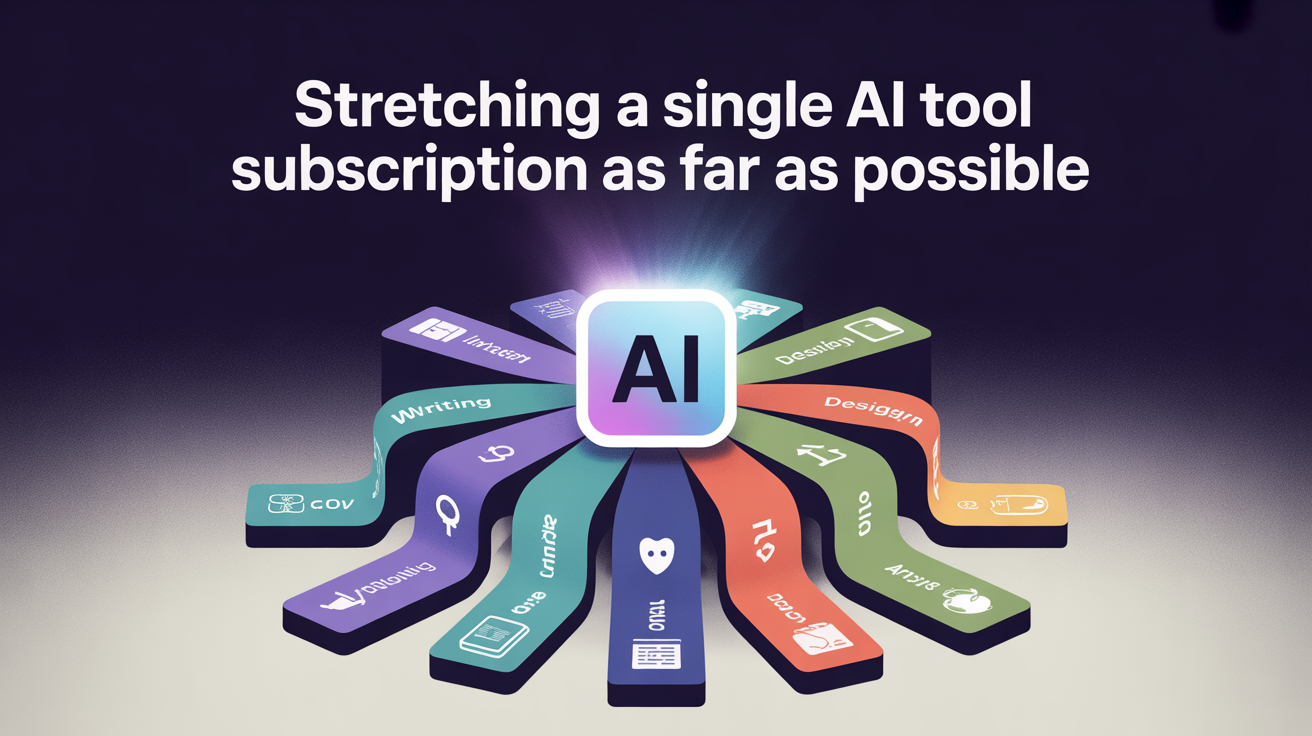
When you learn how to stretch a single subscription across writing, planning, research, repurposing, analytics, and product creation, your costs stay low while your output climbs.
The tool becomes your main assistant, not something you only open when you need a quick blog intro.
You use it for everything instead of jumping between scattered apps and overpaying for tools that overlap.
The first shift is mental. You stop viewing your paid subscription as a “writing tool” and start treating it as your central production engine.
A single model can draft your blog posts, plan your email sequences, write your sales pages, repurpose your old content, turn transcripts into usable assets, digest analytics reports, and help you build digital products.
When you rely on one tool for all these tasks, you get faster because you’re not constantly switching platforms or adjusting to new interfaces.
The model learns your tone over time. It becomes easier to guide. You get more done with less friction.
A maximum-mileage playbook starts with knowing exactly what the tool can handle.
ChatGPT, Claude, Gemini, and Perplexity all shine in different ways, but each one can carry a full week’s content workload on its own.
If ChatGPT is your only paid tool, use it for everything from long-form drafts to short-form ideas, lead magnets, content calendars, and weekly analytics reviews.
If Claude is your choice, lean on its long-context strength to process big documents, rewrite PLR, assemble full reports, and generate eBooks without breaking them into pieces.
If Gemini is your subscription, keep your work inside Docs and Sheets so the model can help you brainstorm, organize, rewrite, and refine without jumping between apps.
If Perplexity is the one you pay for, let it support every stage of research, validation, fact-checking, and data digestion before you draft anywhere else.
The trick is keeping everything inside your main tool until the final polish.
Instead of outlining in one model, drafting in another, and refining in a third, you focus on your primary subscription for the heavy lifting.
You can still use free tiers of other tools for quick checks or small fixes, but your main subscription is where you build the full content pieces.
This saves time because the tool stays in the same thread with all your context, notes, and examples. You’re not resetting the conversation every time you switch platforms.
You can stretch your subscription even further by batching your work. When you give your AI one task at a time, you spend more hours than needed.
When you group similar tasks together, the model stays in the same mental lane and moves faster.
A weekly batching routine might look like this: Monday for blog posts, Tuesday for email sequences, Wednesday for product creation, Thursday for funnels and landing pages, and Friday for analytics reviews.
You stay organized, and the AI stays sharp. The more the tool sees your patterns, the smoother the workflow gets.
Batching also applies to repurposing.
Instead of reinventing the wheel each day, you dump all your content into your AI once per week and ask it to create everything in one focused session.
You give it a long-form piece and then request social captions, email angles, short scripts, carousel ideas, and quote cards.
Using the same subscription for all of it saves hours.
The tool retains tone, structure, and direction because you’re doing it all in the same thread instead of splitting it into five different sessions across multiple tools.
Another way to stretch your subscription is by using it to plan and review your analytics instead of relying on costly dashboard tools. Most AIs can read screenshots, text dumps, or CSVs.
You can give it your open rates, click-through rates, traffic stats, and sales numbers and ask it for trends, suggestions, and “what to do next.”
This saves you from buying extra analytics apps or marketing dashboards.
The AI handles the interpretation. You make the decisions. It’s fast, flexible, and perfect for budget-conscious marketers who want clarity without paying for enterprise-level tools.
Your subscription becomes even more valuable when you use it to create product assets.
Whether you’re building lead magnets, short eBooks, workshop outlines, challenge scripts, or low-ticket offers, you can assemble everything using the same tool.
Let it draft the text. Let it refine the flow. Let it break the content into modules. Let it write worksheets, prompts, checklists, and quick-start guides.
You get a full product without leaving the tool. You don’t need a separate eBook generator or fancy layout software unless you want polished design later.
The writing core is handled inside your main subscription.
Timing strategies come into play too. Some tools—especially Claude—give you a usage meter that resets at specific times.
When you hit your limit, you don’t sit and wait. You jump to a free tier of another AI to keep working.
If Claude tells you it refreshes at 8 p.m., you switch to ChatGPT or Gemini for small tasks, repurposing, or quick brainstorming until your window resets.
You stay productive without paying for multiple subscriptions. This rotation strategy keeps your workload moving even when your main model is temporarily capped for the day.
Another mileage tactic is storing reusable instructions inside the tool so you don’t rewrite prompts every time.
If your subscription lets you create saved instructions, memory cards, or custom preferences, use them.
This makes the model respond faster and more accurately because it already knows your tone, audience, and content style. Reusable prompts also transform your workflow.
You can load your blogging system, your email system, your product creation system, or your funnel system with a single message.
The more reusable patterns you build, the more powerful your main subscription becomes.
You can squeeze even more value by using your paid model to check and improve work from free models. Let the free tools do quick brainstorming or rough drafts.
Then paste the output into your main subscription for polishing, organizing, tightening, and elevating.
This lets you leverage multiple models without paying for all of them. You’re essentially extending your paid tool’s reach by pairing it with free helpers that handle the grunt work.
When you learn to stretch one subscription this way, it becomes your core engine. You reduce tool hopping, save money, eliminate duplication, and stay organized.
You get into a rhythm where your main subscription supports everything from planning to publishing.
You rely on free tiers for the small tasks, timing strategies to avoid downtime, and batching routines to maximize speed.
Once you build these habits, a single AI plan feels surprisingly powerful.
It covers more of your business than you expected, costs far less than a large stack, and keeps your workflow simple, consistent, and fast.